Dreaming about a few acres near Tumalo? The view from the road can make it look simple: open space, room for horses, and quick access to Bend and the river. But small-acreage living here is more hands-on than many buyers expect, and that is exactly why it appeals to the right person. If you want a realistic picture of what daily life on small acreage near Tumalo really looks like, this guide will help you understand the tradeoffs, the responsibilities, and the rewards. Let’s dive in.
Small Acreage Near Tumalo Means Rural Living
Tumalo is an unincorporated rural community in Deschutes County, and the county’s Tumalo Community Plan guides planning in the area through 2040. That rural setting shapes how property is used, developed, and maintained.
One of the biggest things to understand is that zoning near Tumalo is not uniform. Deschutes County includes areas such as the Tumalo Residential District, TuR5, and RR-10, and each can allow different combinations of residential, agricultural, and limited rural uses. Two properties may look similar from the road but have different lot standards or development rights, which is why parcel-specific review matters.
Daily Life Is More Active Than In-Town Living
If you are coming from a neighborhood home, the biggest adjustment is often the daily routine. Small acreage usually asks more from you in terms of time, observation, and ongoing maintenance.
OSU Extension describes small-acreage horse farms in Central and Eastern Oregon as 1 to 10 acre operations with unique management challenges. Even if you are not using the property for horses full-time, many of the same realities still apply: checking water, monitoring ground conditions, managing dust and mud, and keeping improvements functional through the seasons.
For horse owners, a dry lot or paddock often becomes the center of the setup. On smaller properties, pasture is commonly a supplement for feed and turnout rather than a place for continuous grazing. That means layout matters just as much as acreage count.
Horses Change How You Use the Land
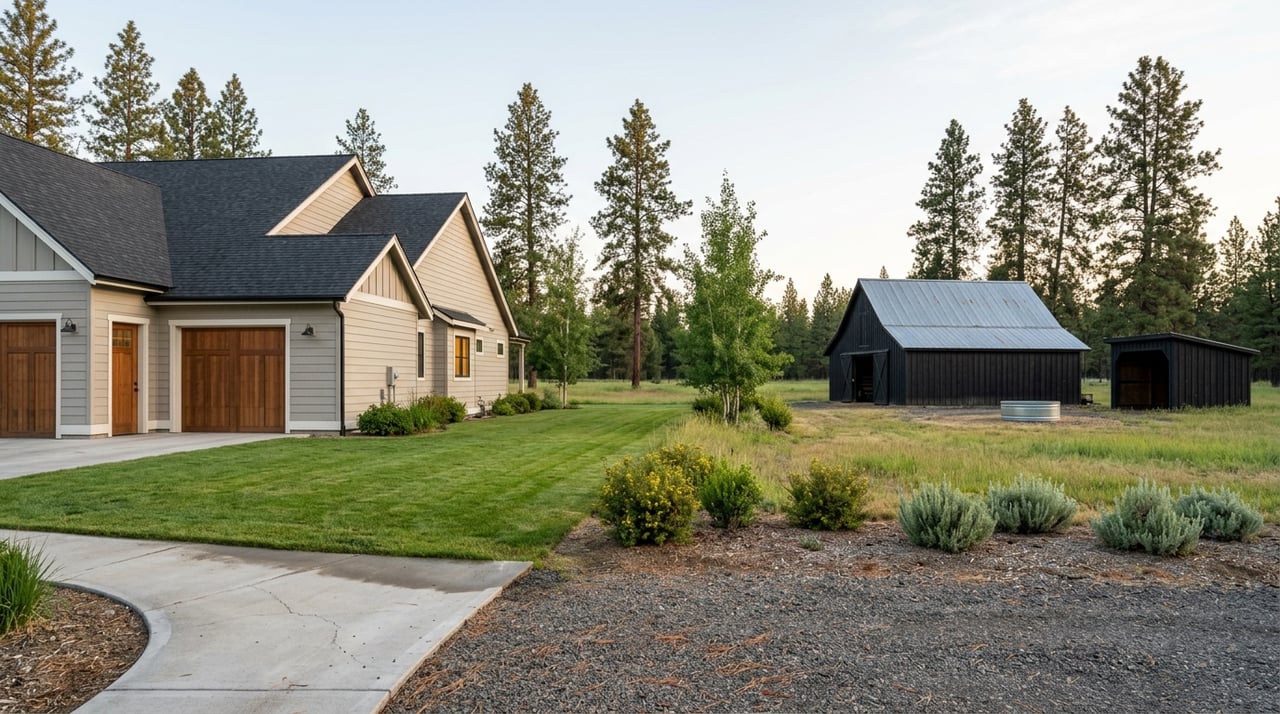
If your goal is an equestrian lifestyle, small acreage near Tumalo can work beautifully, but it usually requires practical planning. A property with a good barn or shelter is helpful, but the day-to-day function of fencing, feed storage, turnout space, and manure handling often matters more.
OSU notes that a 1,200-pound horse may eat about 28 pounds of hay a day. That makes hay storage and winter feed planning a regular part of ownership, not a minor detail. On many small properties, you are thinking ahead about where feed will stay dry, how animals move between areas, and how to keep footing usable when conditions change.
Fencing is another major part of the equation. OSU recommends strong, secure, horse-safe fencing and states that barbed wire should never be used for horses. Buyers who know equestrian property often focus quickly on safe layout, not just visual appeal.
Pasture Is Not a Set-It-and-Forget-It Feature
One of the most common misconceptions about small acreage is that green pasture automatically means low-effort grazing. In practice, pasture near Tumalo is a managed resource.
OSU recommends partial-season grazing or limited turnout on small acreage and notes that horses may need to be moved off pasture when grass is not ready or when ground conditions are poor. In many cases, a dry lot is used whenever the land needs protection.
That creates a seasonal rhythm. Spring often brings pasture growth and turnout decisions, summer brings irrigation and dry-lot use, and winter brings hay feeding, mud management, and repair work. The land is usable year-round, but not in the same way every month.
Water Is a Major Part of Ownership
On rural property, water is not just about turning on a tap. If a home is served by a private well, the homeowner is responsible for testing, maintenance, and operation.
Oregon guidance for private well owners recommends routine testing every one to two years. In an Oregon real estate transaction involving a domestic well, the seller must test for arsenic, nitrate, and total coliform bacteria and provide the results and required form to the buyer. For acreage buyers, this is one of the clearest examples of how rural ownership includes systems that need regular attention.
If a property includes irrigated ground, that is a separate question from household water. OSU notes that irrigation depends on whether a property has irrigation rights, and Tumalo Irrigation District handles water turn-on and turn-off requests through its office. Irrigation can add real value and usability, but it also requires management based on season, weather, soil, and plant growth.
Septic Matters More Than Buyers Expect
Septic systems deserve careful attention on acreage property. If you are buying undeveloped land or planning future improvements, septic suitability can shape what is possible.
Deschutes County describes a site evaluation as an investigation of whether a property can adequately treat wastewater. It is required before onsite wastewater or building permits can be issued for existing lots or when creating new lots. DEQ also advises buyers to ask whether a lot has been evaluated, review the site evaluation report, and confirm that the approved system location works for their plans.
This matters because changes to a property can affect septic suitability. County guidance notes that site features such as wells, fill, and driveways can influence what is allowed. In other words, layout decisions on acreage are connected, and one improvement can affect another.
Buildings and Layout Drive Everyday Function
On small acreage, the way the property is arranged can be more important than the raw number of acres. A functional layout can make chores easier, improve animal movement, and reduce seasonal headaches.
OSU notes that barns, loafing sheds, storage buildings, roof runoff, gutters, and manure storage all affect mud and water quality. A dry lot can also serve multiple roles, including a run from a stall, a small outdoor arena, or a round pen. That flexibility is part of why experienced acreage buyers tend to study usability closely.
When you walk a property, it helps to look beyond finishes and views. Think about where vehicles turn around, where hay would be stored, how water drains, and how animals or equipment would move through the site. Those details shape daily comfort more than many first-time acreage buyers realize.
Wildfire Readiness Is Part of the Lifestyle
In Deschutes County, wildfire readiness is part of rural ownership from the beginning. It is not just a seasonal concern.
The county is considering rural-focused changes that include fire-resistant materials for new rural residential construction and defensible-space standards for rural properties. The Oregon State Fire Marshal’s defensible-space program is intended to help property owners protect homes and surrounding areas through practical measures.
For you as a buyer, that means evaluating vegetation, access, and the home’s overall readiness as part of the property search. A beautiful setting is still the goal, but so is understanding how the site may need to be maintained over time.
The Lifestyle Reward Is Real
For many buyers, all that responsibility is worth it. Small acreage near Tumalo offers a relationship to land and outdoor living that is hard to replicate in town.
Tumalo State Park provides day-use access to a 2.4-mile Tumalo segment of the 12-mile Deschutes River Trail. That trail continues south to Riley Ranch Nature Reserve, and the river stretch also draws kayakers and anglers. For buyers who want room to breathe without giving up access to recreation, that balance is a big part of Tumalo’s appeal.
This is the trade. You take on more responsibility for land, water, structures, and seasonal upkeep. In return, you get space, privacy, and a lifestyle shaped by the rhythm of Central Oregon rather than a subdivision calendar.
What Smart Buyers Focus On First
If you are seriously considering small acreage near Tumalo, it helps to look at the property through both a lifestyle lens and a systems lens. The setting may draw you in, but the details determine whether the property truly fits the way you want to live.
A smart review often starts with questions like these:
- What zoning applies to this parcel?
- Is there a private well, and what testing records are available?
- Does the property have irrigation rights?
- Has the site been evaluated for septic, and does that fit future plans?
- Is the fencing horse-safe and functional?
- How does the property handle mud, runoff, and manure?
- What wildfire-readiness work may be needed?
These are not minor details. On small acreage, they are part of understanding the property as a living system.
If you want guidance that blends lifestyle vision with practical acreage knowledge, Karen Wilson offers a thoughtful, high-touch approach for buyers and sellers across Central Oregon.
FAQs
What does small acreage living near Tumalo involve day to day?
- Daily life often includes checking water, monitoring land conditions, managing dust or mud, maintaining fencing and outbuildings, and adjusting routines with the seasons.
What should buyers know about Tumalo acreage zoning?
- Properties near Tumalo may fall under different Deschutes County zones, including TuR, TuR5, or RR-10, and those zones can affect residential, agricultural, and other allowed uses.
What should buyers know about private wells on Tumalo acreage?
- Private well owners are responsible for testing, maintenance, and operation, and Oregon requires sellers in domestic well transactions to provide specific water test results and forms to buyers.
What should buyers know about septic on small acreage near Tumalo?
- Septic suitability should be reviewed carefully because site evaluations are required before certain wastewater or building permits, and site features like wells, fill, and driveways can affect options.
What should buyers know about horses on small acreage in Central Oregon?
- Small-acreage horse properties often depend on dry lots, careful pasture management, safe fencing, hay storage, and regular manure management rather than continuous grazing.
What makes Tumalo acreage lifestyle appealing despite the work?
- Many buyers value the privacy, open space, equestrian potential, and access to outdoor recreation, including nearby Deschutes River Trail access at Tumalo State Park.