Ask anyone who drives down Mt. Washington Drive toward Galveston Avenue why the flagging crew near 17th Street seemed to vanish for most of August, and you'll likely get a shrug. The city's road work and five new restaurant spaces nearby are on overlapping schedules. Bend Source has reported on the long-planned road project.
Galveston Avenue sits at the base of Awbrey Butte, the commercial strip most residents pass through on the way down from Summit Drive, Overlook Drive, and the rest of the hill toward downtown. For a decade, the city has talked about rebuilding it. This fall, that rebuild is finally underway, but in a much smaller form than what was originally proposed, and the reason why says more about this corridor's next few years than the construction itself does.
How the Project Changed
The City of Bend first eyed a Galveston redesign about ten years ago. That earlier plan was ambitious: stormwater infrastructure and traffic safety upgrades priced between $8 million and $9 million. It stalled during the COVID-19 pandemic and never came back in its original form. When the city later rolled out a blitz of transportation projects funded by a $190 million bond that voters passed in 2020, Galveston wasn't on the list.
What's happening now is a leaner substitute. City Engineer Ryan Oster has described the current effort, priced around $2 million and funded through transportation System Development Charges, as a deliberate scale-back from the earlier vision, shaped in part by concern from business owners about what an extended closure would do to a street that depends on foot traffic and easy parking. The city didn't just run out of money for the bigger plan. It chose the smaller one because Galveston couldn't afford to go dark for a season.
That choice explains almost everything about how this fall is unfolding.
The Three Phases, In Plain Terms
The project is broken into three stages, each timed to avoid shutting the corridor down.
Phase 1 ran through summer 2026 and focused on replacing worn driveway and alley approaches. It was localized enough that Oster described it as barely noticeable to anyone just passing through.
Phase 2 is the one visible right now. It centers on 17th Street, where crews are building a raised crossing designed to slow traffic where the corridor transitions from Bend's denser residential blocks into the business district. That work involves about a month of flagging, plus the relocation of a water system pressure-reducing valve done as shoulder work outside the travel lanes. Two-way traffic stays open throughout, and access to every business on the street is being maintained.
Phase 3 is the big one, scheduled for late winter 2026 through spring 2027. This is where the corridor gets a full grind-and-repave from the Deschutes River bridge through 14th Street, including the roundabout, along with new pedestrian medians and curb extensions that will shorten crossing distances at several intersections. It's also the phase the city has been most careful to sequence around, because it's the one that will actually require limited full closures for paving.
The pattern across all three phases is restraint. Nothing shuts Galveston down for long, and the biggest disruption is saved for the season when the fewest people are walking the corridor for its patios.
Why the Raised Crossing Matters More Than It Looks
The safety case for this project isn't abstract. Laurel Porcari, whose driveway connects to Galveston near 16th Street, has seen the street get busier and faster over the years.
In a report by Bend Source, Laurel Porcari said, "It's very difficult to tell whether someone two blocks away is doing the speed limit or double the speed limit."
That's the problem the 17th Street crossing is built to solve. Raised crossings work like a wide, flat speed bump with a crosswalk built into the top of it, forcing cars to slow down at exactly the point where drivers coming downhill off the surrounding residential streets meet pedestrians heading into the business district. It's a small piece of infrastructure, but it's arriving at the exact seam where Galveston's character changes from quiet street to working commercial block.
Restaurant Projects on a Similar Timeline
While the city works through its three phases, a separate and larger transformation is happening on the ground, and its timeline lines up with the road project almost exactly.
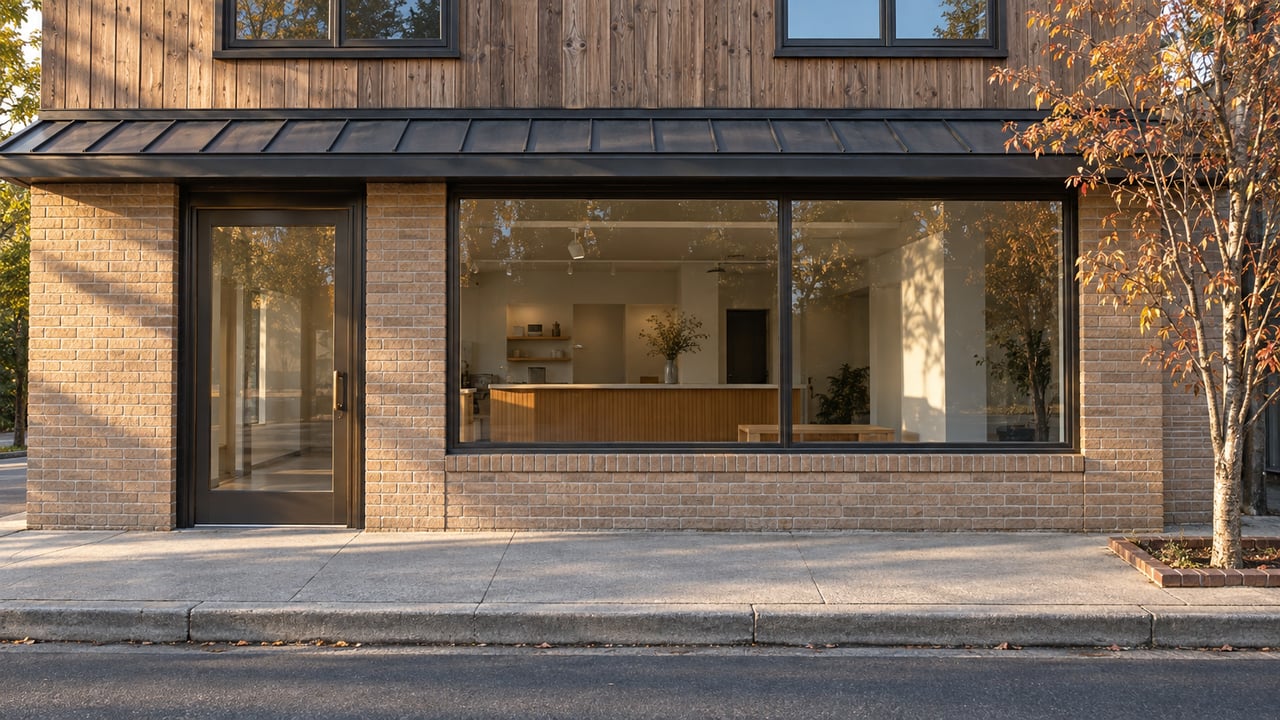
Local development group RSM Investments is building a two-story, 12,000-square-foot building called Galveston Supply at 1009 Galveston Avenue, on the site of the former Boss Rambler taproom. The project brings three new restaurant suites, ranging from roughly 1,100 to 3,500 square feet, each designed with its own identity but tied together architecturally with the adjacent lot. Every space includes a conditioned patio built for Bend's sunny-day, cool-night climate, since a covered outdoor seating area works here in a way it wouldn't in most parts of the country.
Next door, RSM is also renovating the building historically known as the Bakery Building at 1005 Galveston, the space that most recently housed Sunriver Brewing. That renovation adds 1,105 square feet of new interior space and a 518-square-foot conditioned patio, along with roll-up garage doors and new restrooms, while keeping the original structure's footprint intact.
Combined, the two projects introduce five new restaurant opportunities to a corridor that already includes Bosa, an established high-end restaurant the city itself points to as an anchor of the block.
The schedules overlap: RSM's leasing materials describe buildout windows in winter 2026 and spring 2027, while the city's Phase 3 repaving is scheduled for late winter 2026 through spring 2027. The city's project materials say coordination with private redevelopment along Galveston reduces public costs and makes more efficient use of city funds.
What This Means for the Walk Down the Hill This Fall
For anyone living on Awbrey Butte right now, the practical takeaway is straightforward. The flagging near 17th Street this fall is short-term and localized, and every business on the strip stays reachable throughout. If the timing doesn't work for a particular errand, the Awbrey Village Shopping Center at NW Mt. Washington Drive and Summit Drive remains the closer option up on the butte itself, with its own bank, grocery, and small handful of restaurants that don't require the drive downhill at all.
The bigger shift is still ahead. By next spring, the corridor most residents already treat as their default dinner-and-errands stop will have a repaved roadway, safer crossings at both Harmon and 17th, and five additional places to eat within a two-block stretch that already draws people from across Bend. The disruption this fall is the quiet part. The addition next door is the part that changes what a Tuesday night on the butte actually looks like.
If you're weighing what a home on Awbrey Butte offers beyond the view, corridors like Galveston are part of the answer. Karen Wilson can walk you through what's changing at the base of the butte and what it means for daily life on it. Schedule a private consultation to talk through the details.